




Mission, Vision, and Values
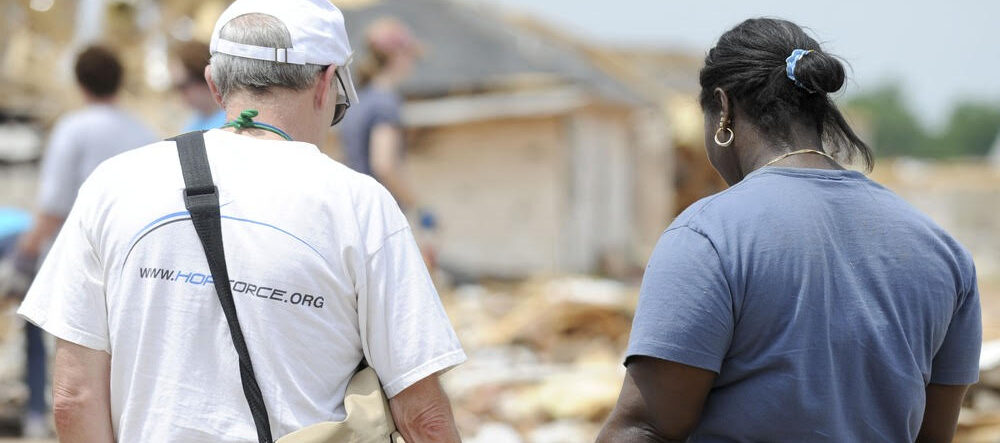
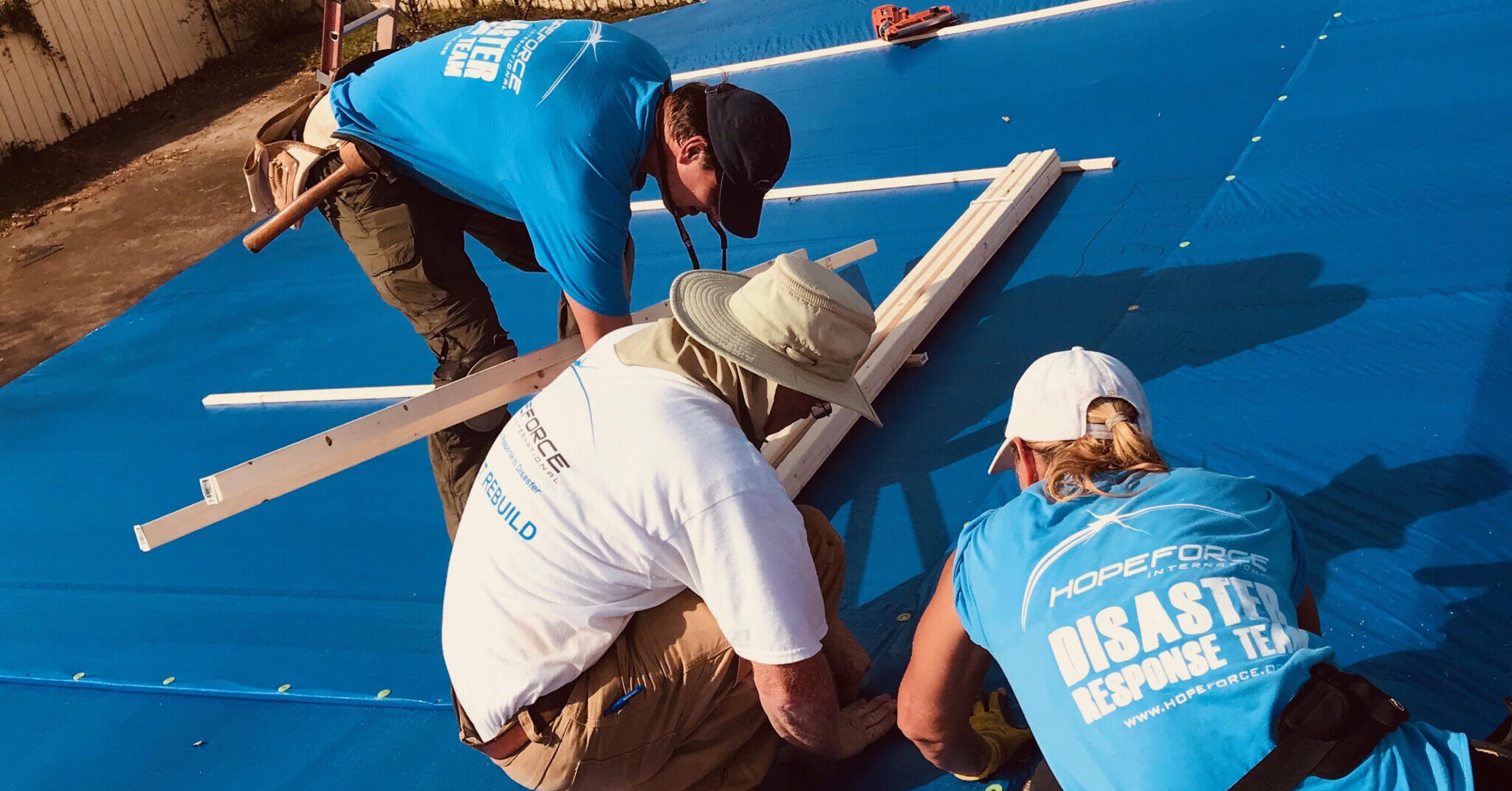
Hope Force International exists to alleviate suffering caused by disasters and chronic human need by mobilizing the global Christian community into compassionate action. When disaster strikes, Hope Force responds with trained volunteers and Reservists who serve survivors with physical relief, emotional care, and spiritual support. Their work begins in moments of crisis, but it often leads to something deeper: restored hope, human connection, and the reminder that no one is forgotten in their hardest moments.
The vision of Hope Force International is to be recognized as one of the most trusted disaster response forces in the world, bringing hope to those affected by crisis or disaster. As disasters grow in frequency and complexity, Hope Force is committed to equipping and deploying people of faith who are ready to respond quickly, humbly, and effectively, meeting needs one person at a time while supporting communities on the long road to recovery.
Rooted in faith and guided by prayerful discernment, Hope Force International values compassionate presence over quick solutions, people over programs, and trust over recognition. The organization is shaped by humility, courage, and service, believing that showing up with care, skill, and faith can make a lasting difference in moments when hope feels most fragile.
Staff Culture
Hope Force International is shaped by urgency, compassion, and a shared sense of calling. Whether responding to a disaster, training Reservists, supporting volunteers, or caring for one another behind the scenes, the culture is defined by presence and readiness. This is an organization where people step in quickly, shoulder responsibility together, and do whatever is needed to serve well in the moment.
All Hands on Deck
Hope Force operates in environments where needs are immediate and plans often change. The culture reflects that reality. Team members are adaptable, responsive, and willing to step outside formal roles when the situation requires it. Titles matter less than responsibility, and there is a shared understanding that when disaster strikes, everyone plays a part in supporting the mission.
Family-Oriented and Deeply Relational
At its core, Hope Force feels like a family. Relationships are close, long-standing, and deeply valued. People know one another’s stories, pray for one another, and show up in both joyful and difficult seasons. Loyalty runs deep, and there is a strong sense of mutual care between staff, volunteers, founders, and partners.
Spirit-Led and Prayerful
The Holy Spirit is not an abstract concept at Hope Force, but an active presence in how decisions are made and how people serve. Prayer, discernment, and listening shape the work. The culture leaves room for God to interrupt plans, redirect efforts, and guide responses in ways that don’t always follow linear or predictable paths. Faith is lived openly and naturally, not as performance, but as dependence.
Activated and Responsive
Hope Force is a culture of action. People here are doers who respond quickly and move toward need. There is little distance between identifying a problem and stepping in to help. This creates a fast-moving environment that values initiative, courage, and trust in one another’s judgment.
Humble, Servant-Minded Leadership
Leadership at Hope Force is rooted in service. Leaders are present, approachable, and willing to carry weight alongside the team. Authority is exercised relationally, and respect is earned through consistency, faithfulness, and care rather than hierarchy. Longstanding contributors are honored, and lived experience is deeply respected.
Resilient and Mission-Focused
The work is emotionally and spiritually demanding. Hope Force’s culture reflects resilience built through shared experience, faith, and perseverance. Team members understand the cost of this work and remain committed because they believe deeply in its purpose. The mission provides clarity and motivation, even in seasons of fatigue or uncertainty.
Stewardship with Heart
Resources, relationships, and trust are treated as sacred. While systems may continue to mature, the underlying posture is one of careful stewardship, accountability, and gratitude. The organization is mindful that donor generosity, volunteer service, and survivor vulnerability all require humility, integrity, and care.
Development Snapshot
Hope Force International is sustained through the generosity of individuals, churches, and partners who view their giving as an expression of faith, obedience, and shared responsibility in times of crisis. Supporters are drawn to Hope Force’s calling to mobilize the global Christian community into compassionate action, and they give with a deep sense of trust that their generosity will be stewarded carefully to meet urgent and sacred needs.
The development program is entering a season of strengthening and maturation. Historically supported through founder relationships, staff engagement, and organic generosity, Hope Force is now intentionally building the systems, structure, and discipline required to support long-term sustainability. This includes expanding major and church-based giving, developing recurring revenue streams, and laying the groundwork for future capital and legacy initiatives that align with the organization’s mission and capacity.
Major and leadership gifts play an increasingly important role in resourcing Hope Force’s work. These relationships are highly relational and deeply personal, often rooted in shared faith, prayer, and firsthand exposure to disaster response. Donors value clarity, humility, and authenticity, and they respond best to invitations that connect generosity directly to the care of survivors, responders, and communities. Stewardship is approached as ministry, with an emphasis on trust, presence, and long-term partnership rather than transactions.
Hope Force’s donor community includes committed individuals, churches, and emerging partners who are motivated by responsiveness and impact. Supporters appreciate that Hope Force meets needs one person at a time, even in complex and unpredictable environments. They value honest storytelling, clear outcomes, and opportunities to engage both financially and relationally, often through volunteerism, prayer, and advocacy.
As the organization advances its 2030 Strategic Plan, development efforts are being strengthened through clearer planning, improved systems, and closer alignment between development, operations, and leadership. CRM tools, disciplined tracking, and defined processes are being emphasized to support accountability and shared ownership, while prayer and discernment remain central to how relationships are cultivated and stewarded.
This is a development environment marked by responsibility and readiness. Hope Force International is building the financial foundation required to care well for responders, staff, and survivors, while honoring the faith and generosity of those who support the mission. For a development leader who is energized by building sustainable systems, stewarding trust, and resourcing Spirit-led work in moments of deep need, this represents a meaningful and timely opportunity to serve.
Key Responsibilities
Fundraising Planning and Stewardship
Develop and carry out fundraising plans that support Hope Force International’s mission, operational needs, and long-term sustainability. Translate existing priorities into clear fundraising activities that strengthen revenue reliability, donor trust, and organizational readiness. Partner closely with the Founders to ensure development efforts are aligned with current capacity, timing, and mission demands.
Fundraising Execution and Donor Engagement
Execute all core fundraising functions, including annual giving, major gifts, recurring giving, church-based support, partnerships, and campaign-related initiatives. Personally manage a portfolio of major donors and prospects, supporting cultivation, solicitation, and stewardship alongside the Founders. Ensure fundraising activity is disciplined, responsive, and grounded in relationship rather than urgency alone.
Capital and Major Gifts Support
Coordinate and support capital and major gifts initiatives as directed, including feasibility work, donor tracking, and stewardship follow-through. Monitor donor commitments and progress toward fundraising goals. Develop recognition and stewardship practices that honor generosity, reinforce trust, and support long-term partnership without over-promising or over-extending the organization.
Church, Business, and Partner Giving
Strengthen church-based giving partnerships that connect financial support with volunteer engagement and shared mission. Build pathways for businesses and aligned organizations to participate financially and relationally in Hope Force’s work. Collaborate with training and deployment teams to ensure giving opportunities reflect real needs, real stories, and real impact.
Systems, Infrastructure, and Reporting
Manage and maintain donor systems and CRM processes, including hands-on data entry, pipeline tracking, and system improvements. Build clear donor workflows that support consistent communication and long-term engagement. Prepare fundraising calendars, dashboards, and reports for leadership and Board use. Ensure timely acknowledgments, accurate reporting, and compliance with EFCA development guidelines and annual CSR filings.
Development Capacity Building
Support the strengthening of the development function through documentation, process clarity, and shared ownership. Assist in recruiting, onboarding, and supporting additional part-time or full-time development staff as approved. Contribute to reducing reliance on informal or personality-driven fundraising by building repeatable, organization-centered practices.
Cross-Functional Collaboration
Work collaboratively with the Founders, operations, training, communications, and deployment teams to align fundraising efforts with on-the-ground realities. Ensure donor communications are accurate, thoughtful, and respectful of survivors, responders, and partners. Support consistent messaging that reflects Hope Force’s mission and lived experience.
External Engagement and Representation
Participate in donor meetings, church gatherings, and partner conversations as needed, both regionally and nationally. Represent Hope Force International with humility, clarity, and care, honoring the trust placed in the organization by donors, volunteers, and the communities served. Travel as required to support relationship-based fundraising and firsthand understanding of the mission.
Staff Leadership and Team Development
Provide steady, relational leadership to development staff by cultivating a culture of trust, accountability, and shared purpose that reflects Hope Force International’s faith-centered mission. Offer clear coaching, direction, and consistent communication that supports individual growth while reinforcing alignment with organizational priorities and leadership vision. Strengthen organizational capacity through thoughtful recruitment, onboarding, and ongoing staff development, encouraging collaboration across departments while modeling servant leadership.
Key Qualifications
Education and Formation
Bachelor’s degree required. A degree in nonprofit management, business, communications, theology, or a related field is preferred. Additional training in fundraising strategy, donor engagement, capital campaigns, or organizational development is a plus. Ongoing professional and spiritual formation is valued, particularly as development work at Hope Force is approached as stewardship and ministry.
Critical Fundraising Experience
Minimum of seven (7) years of progressive nonprofit fundraising experience, with demonstrated success in major gifts, donor cultivation, and relationship-based giving. Experience building or strengthening development programs that move beyond founder- or personality-driven fundraising is essential. A strong track record of increasing revenue while improving systems, accountability, and sustainability is expected.
Relevant Development and Systems Experience
Hands-on experience managing donor databases and CRM systems, including pipeline management, reporting, and stewardship tracking. Familiarity with recurring giving programs, church-based fundraising, campaign support, and partnership development. Experience working within a faith-based organization or ministry context is highly valued, particularly where prayer, discernment, and relationship are central to fundraising efforts.
Strategic and Operational Leadership
Demonstrated ability to think strategically while executing practically. Comfortable building systems where they do not yet exist, setting priorities, and managing multiple initiatives at once. Able to partner closely with senior leadership, founders, and Board members while maintaining clarity, humility, and follow-through. Experience supporting organizational growth in dynamic or high-responsibility environments is important.
Relational, Pastoral, and Collaborative Approach
Strong interpersonal and communication skills with the ability to build trust across donors, churches, volunteers, staff, and leadership. Comfortable representing the organization externally in donor meetings, church settings, and partner conversations. Communicates with warmth, credibility, and spiritual sensitivity, recognizing that generosity at Hope Force is deeply personal and often faith-motivated.
Alignment with Mission and Calling
Clear alignment with Hope Force International’s Christian mission, values, and Spirit-led approach to service. A demonstrated commitment to ethical stewardship, integrity, and care for people. Willingness to travel up to 20% of the time to support relationship-based fundraising and firsthand understanding of the mission.
Challenges & Opportunities
Challenges
Building Structure While Honoring Relational Roots
Hope Force’s generosity has historically been fueled by deep relationships, founder trust, and shared calling. As the development function matures, this leader will need to build systems, discipline, and clarity without disrupting the relational fabric that donors, churches, and partners deeply value. Success will require sensitivity, patience, and strong relational intelligence alongside operational rigor.
Funding in a Disaster-Response Environment
Disaster response is inherently unpredictable. Giving often surges during crisis moments and quiets in between. This role must balance urgency with sustainability, helping the organization move toward more predictable revenue streams while remaining responsive to real-time needs. Navigating this tension thoughtfully will be a central challenge.
Shifting from Personality-Driven to Organization-Centered Giving
One of the most meaningful and complex aspects of this role is helping Hope Force reduce reliance on individual-driven fundraising. This requires translating trust in people into trust in systems, stories, and mission clarity, while honoring the relationships that have carried the organization to this point.
Hands-On Execution in a Lean Environment
This is a builder role in a growing organization. The Director of Development will be deeply involved in day-to-day execution, from CRM management to donor communication to reporting. Balancing strategic planning with hands-on responsibility will require focus, organization, and stamina.
Communicating Complex, Sacred Work with Care
Hope Force’s work involves trauma, loss, and deeply personal moments for survivors and responders alike. Telling these stories in a way that is honest, dignified, and spiritually grounded, without oversimplifying or sensationalizing, requires discernment and maturity.
Opportunities
A Defining Moment to Shape a Sustainable Development Program
This is a rare opportunity to help shape a development function at a pivotal moment, laying foundations that will support Hope Force’s mission for decades to come. The right leader will have meaningful influence in building systems, rhythms, and practices that bring clarity, accountability, and care to the organization’s funding model.
Deeply Relational, Faith-Centered Fundraising
Donors to Hope Force are motivated by faith, prayer, and a desire to respond when people are hurting. This role offers the opportunity to steward generosity as ministry, building long-term partnerships that are spiritually meaningful and deeply aligned with mission impact.
Close Partnership with Executive Leadership
The Director of Development will work closely with the Founders and Board gaining access, trust, and shared responsibility. This proximity allows for collaboration, learning, and the ability to see how generosity directly supports responders, staff, and survivors.
Tangible, Immediate Impact
Few fundraising roles offer such a clear connection between giving and outcome. Every gift supports training, deployment, responder care, and real people in crisis. For a fundraiser who is motivated by seeing generosity translated into action, this work is profoundly meaningful.
A Community Defined by Calling and Commitment
Hope Force’s staff, volunteers, donors, and partners are united by shared faith and purpose. This role sits within a culture marked by prayer, humility, and an all-hands-on-deck mentality. For the right leader, this is an opportunity to serve alongside people who are deeply committed to one another and to the work God has placed before them.
First Year Wins
Establish a Clear, Disciplined Development Rhythm
Within the first year, you will bring clarity and consistency to Hope Force’s fundraising efforts by establishing realistic plans, calendars, and donor pipelines. This includes stabilizing annual and major giving activity, improving follow-through, and creating shared visibility into fundraising progress for leadership and the Board. The result is greater confidence, predictability, and trust across the organization.
Strengthen Major Donor and Church Relationships
You will deepen relationships with key donors and church partners through intentional cultivation, thoughtful stewardship, and regular communication. By partnering closely with the Founders, you will help ensure that donors feel known, prayed for, and clearly connected to the impact of their generosity. Early wins may include renewed commitments, upgraded gifts, or more consistent engagement from core supporters.
Lay the Foundation for Sustainable Revenue Streams
In your first year, you will begin strengthening recurring giving and partnership-based support, helping Hope Force move toward more reliable funding beyond crisis-driven surges. This may include clarifying messaging, launching or refining a monthly giving pathway, and improving donor journeys that encourage long-term commitment.
Bring Order and Confidence to Development Systems
You will take ownership of the CRM and donor systems, ensuring data accuracy, clear pipelines, and usable reporting. Early success looks like cleaner records, clearer dashboards, timely acknowledgments, and leadership access to reliable fundraising information. These improvements reduce friction, support better decision-making, and free others to focus on mission-critical work.
Support a Shift Toward Organization-Centered Giving
Through documentation, shared processes, and consistent execution, you will help reduce reliance on personality-driven fundraising. Donor trust begins to shift toward Hope Force as an organization, supported by clear systems, consistent communication, and thoughtful stewardship practices.
Improve Alignment Between Development and Mission Delivery
By working closely with operations, training, communications, and deployment teams, you will help ensure that fundraising messages reflect real needs and real outcomes. Donors gain clearer insight into how their giving supports responder care, deployment readiness, and survivor support, strengthening credibility and long-term engagement.
Build Trust as a Steady, Faithful Presence
Perhaps most importantly, by the end of year one, you will be seen as a trusted, steady leader who brings order without disruption and care without urgency-driven pressure. Staff, donors, and leadership experience development not as a scramble, but as a thoughtful ministry of stewardship that supports Hope Force’s calling and those it serves.